Don't Make This Silly Mistake With Your Best Burr Grinder


How to Choose the Best Burr Coffee Grinder
A grinder is among the most essential tools in a coffee maker's arsenal. Which one should you buy?
Burr grinders grind beans between two serrated surfaces that rotate instead of slicing with blades. They're considered to be superior to blade grinders. What are the features you should be looking for in a burr mill?
1. Conical Burrs
A conical burr mill is equipped with angled teeth and the ring of a circular burr that is placed inside the other. This design allows it to grind more efficiently, since the burrs revolve around a single central point. The angled teeth are more efficient in cutting beans evenly, and also produce less heat. This is good because excessive heat can create bitter taste in your coffee. Conical burrs are also more durable than flat ones. Flat burrs are more prone to warping and become dull very quickly, leading to unevenly ground espresso that is unevenly ground. They are also more fragile, which means that small stones and other debris could cause damage over time. Flat burrs also produce more noise and require more frequent maintenance and cleaning.
A number of burr grinders sold on the market call themselves "burr grinders," yet they have flat or no burrs. These "false" burr grinders feature large, flattened teeth and are often paired up with weak motors that produce uneven grounds. They are not true burr grinders and, despite what some people believe they don't provide the same quality of grind as genuine burr grinders.
Although some experts do not agree, others claim that the type of burrs in the grinder can have an impact on the finished taste of the coffee. These theories are largely anecdotal but they hold gained a strong hold on the minds of coffee enthusiasts. Some believe that conical burrs can bring out the unique flavors of exotic beans. Flat burrs enhance dark roasts.
This may or not be the case. But it is something you should think about when you are deciding whether your grinder will have an impact on the quality of your espresso. The only way to be sure for certain is to try the grinder using the beans you plan on using it with. The overall design of the grinder as well as its features of operation will have a greater influence on the final cup than the type or burrs. It's therefore important to consider other factors when you evaluate a grinder, such as its reputation as well as customer reviews.
2. Convenience
The Baratza Encore is a burr grinder that a lot of coffee enthusiasts swear by. Several reviewers praise it as a "time-tested option" that is a great value for money and is well designed for drip, pour-over, French press, and cold coffee.
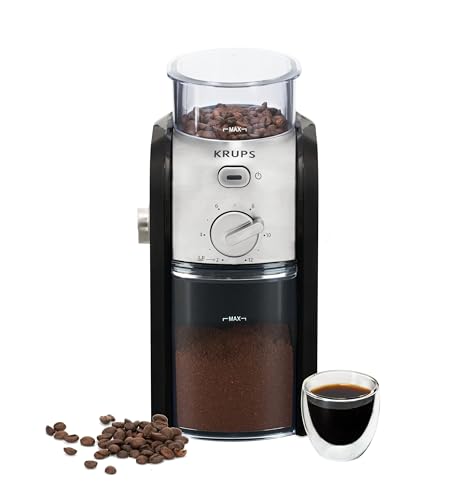
According to the company, the grinder utilizes rotating metal burrs rather than blades to grind beans. This creates more uniform grounds than a grinder or other burr grinders. The burrs also produce less heat which preserves the flavor and aroma of the beans.
electric coffee grinder on the other hand are prone to producing excessive heat and unbalanced-sized ground that can alter the taste of your cup. Burr grinders are also quieter than blades grinders. However, this could differ by model and brand.
While the majority of the burr grinders that we test have conical burrs, a few have flat burrs (two discs with cutting teeth facing one another). We do not recommend them for espresso because they are more difficult to calibrate and are generally less expensive than a premium burr grinder with a flat-burr such as the Fellow Ode Gen 2 or the Baratza Virtuoso+.
Some of the grinders we've tested allow you to set the length of time that the machine will grind for a certain period of time, which is useful when you're making espresso. Others--including our top choice the Baratza Sette270 an integrated intelligent timer that can provide precise split-second timing. This feature is not necessary for most brewing techniques and most burr grinders under $200 use an upgraded version of the windup clock.
The most affordable models, like the Porlex II or the Capresso infinity, use manual burrs. This means you need to turn them manually yourself to grind your coffee. This takes more effort however, it's a good option if you're looking to get simple, compact and inexpensive option that doesn't need electrical power.
The Breville Smart Grinder Pro is another affordable option that uses a burr grinder. It's louder than the other models we've examined, but it's acceptable if you're willing to tolerate some sound. In general, the more expensive grinder is, the quieter it's likely to be due in part to the improved materials and the latest soundproofing technologies.
3. Easy of Use
If you're just beginning to learn about home coffee brewing, there's one tool every expert says is essential: a burr grinder. They produce a finer, more consistent grind than your standard blade grinder. They can help you create brews with better balance of flavor, body and acidity. They are generally more reliable. As you'd expect, a high-quality burr mill can cost up to $200 and can be difficult to use.
So, we spoke to experts and obtained their recommendations for the easiest-to-use electric burr grinders available on the market. Many people, including those on a tight budget are recommending the OXO Conical Burr Grinder. It comes with multiple settings to accommodate a variety of options for brewing, from pour-over to French press, to drip coffee. It did well in our tests.
It's also quieter than some other electric grinders we tested, and it doesn't produce as much heat as some others do. This is important because excessive heat can harm the delicate aromas in your beans.
The OXO grinder has only one drawback: it grinds best on the coarser side of the spectrum. This can be problematic for espresso. If you're a fan of brewing espressos, a grinder with more advanced features, like the Baratza Encore may be a better option.
Manual burr grinders that are powered by cranking, are user-friendly and are ideal for those who drink only just a cup or two of coffee per day. These grinders are great for those who travel, or only need to make only one cup of pour-over coffee.
Bon Appetit Test Kitchen director Chris Morocco loves the Fellow Ode Gen 2 Burr Grinder that has 41 easily-adjustable settings and is capable of producing an excellent beverage regardless of the method you prefer, with the exception of espresso (the flat steel burrs do not grind fine enough). It's a breeze for anyone to use so long as they don't mind the occasional mess or chaff flying away.
4. Cost
A quality burr mill can cost you a few hundred dollars, but it's well worth it. The grinding mechanism is simple enough that even a beginner can figure out how to get the most out of it, and you'll save money in the long run by ditching the pre-ground coffee and bad-for-the-environment coffee pods.
Conical burr grinders are the standard in electric home units, and they're a great choice for most people just starting out with this whole grinding-your-own-beans-at-home thing. The grinders produce a tiny amount of fines, which are tiny pieces of coffee ground that are smaller than the size of grind you choose. However, this is not noticeable to most coffee drinkers.
Flat burrs, that are two discs that have cutting teeth facing one another, are less common in home units but are favored by coffee enthusiasts due to their ability to create an even grind size which is ideal for espresso and French press. They can be expensive and you might have to purchase new burrs each when you change the brew type or level of roast.
According to our experts, the Baratza has the best combination of cost and capabilities for burr mills. It's priced at less than $200, which is a lot less than other models that lack the same capabilities. It comes with a 64-mm, flat brewer set that's ideal for all methods of brewing. It is easy to upgrade to other sets, like those from SSP.
The OXO is another affordable option with a proven track record in our tests. The burrs in this model aren't as precise as the ones in more expensive models however, its user interface and a variety of settings are suitable for both French drip and press. The OXO is a great entry-level model for the majority of people. True coffee enthusiasts may require a more sophisticated model, but the OXO is a good choice for them.
We also tested a few manual burr grinders for those who prefer grinding their beans by hand. These are great for traveling and for people who are only able to make one or two cups of coffee at one time. These models use the same grinding mechanism as electric burr grinders, but operate by hand instead of a motor. They are also typically quieter than electric models.